
How to Choose the Right Tires for Your Car
Picking the right kind of tires for your car can go a long way. The right set of tires can do as much for your car’s performance as improving your engine can. With so many options to pick from, deciding on the best tires can be a daunting task.
At K Tire Pro, we’re here to help you understand the tire shopping process and choose the right tire at the right price. Follow this guide to learn all that you need to about tires!
Types of Tires
There are many different kinds of tires available in the market. Depending on the type of car you have, your tire requirements will change. Your driving style and environmental conditions play a huge role in deciding the right set of tires for your car.
All-season tires
All-season tires, as the name suggests, are designed to perform well in a variety of conditions, including dry roads, wet roads, and light snow. They feature moderate tread depth and rubber compounds that provide a balance between performance, comfort, and traction. These tires are ideal for regions with mild weather conditions year-round, offering versatility and longevity but not excelling in extreme weather conditions.
Pro: These tires are good for mild weather year-round. You’ll enjoy a smooth, quiet ride and great fuel efficiency in most seasons.
Con: All-season tires don’t perform as well as winter tires do in extreme weather, like sub-zero temperatures or snowstorms.
Winter/Snow Tires
Winter or snow tires are specifically designed for cold weather and severe winter conditions, such as ice and deep snow. They have deeper treads with more biting edges and sipes to improve traction, and their softer rubber compounds remain flexible in low temperatures. These tires are best used only during winter months as they wear quickly in warm weather, providing superior traction in snow and ice compared to all-season tires.
Pro: If you live somewhere that does get sub-zero temperatures, ice, and snow, look into winter tires. These tires are made from rubber that stays supple in the coldest weather. Their deep treads give you traction through the most difficult of terrains, including snow and mud.
Con: Winter tires need to be swapped out for summer or all-season tires once temperatures even out. This can be a costly change.
Performance Tires
Performance tires are optimized for high-speed and high-performance driving, featuring shallower treads with larger contact patches for better grip. They often have stiffer sidewalls and softer rubber compounds for improved handling and cornering. These tires prioritize handling, responsiveness, and speed over ride comfort and longevity, and are typically not designed for winter use.
Pro: If you’re someone who wants to use your engine’s horsepower and drive at high speeds, performance tires are perfect for you. These tires are for drivers who prioritize performance and are often used in sports cars. They have excellent grip that can provide stability.
Con: Performance tires typically don’t last as long as other tires. Since they have fewer treads, they wear down faster and need to be replaced often.
Summer Tires
Summer tires are engineered for optimal performance in warm, dry, and wet conditions, with fewer grooves and more continuous ribs for maximum contact with the road. Made from harder rubber compounds that can withstand higher temperatures, they perform best in temperatures above 45°F (7°C). However, they lose traction and become hard in cold conditions, making them unsuitable for winter use.
Pro: Despite their name, summer tires can handle any warm season. They’re engineered for superior traction on damp surfaces, so spring and summer showers are no problem.
Con: These aren’t your safest bet in winter! These tires are made of rubber that hardens in lower temperatures, so swap them out as soon as the temperature drops.
All-Terrain Tires
All-terrain tires are suitable for both on-road and off-road driving, featuring an aggressive tread design with larger voids for better traction on dirt, mud, and gravel. They often have reinforced sidewalls to handle rough terrain and reduce punctures, providing a good balance between on-road comfort and off-road capability, though they can be noisier on highways due to the aggressive tread.
Pro: If you’re a driver who loves to go off-road, these tires are it for you. All-terrain tires can handle surfaces many other tires can’t like gravel, dirt, rocks, and snow.
Con: To deal with tougher terrains, the tread design that offers a hard grip can lead to noisier rides.
Mud-Terrain Tires
Mud-terrain tires are designed specifically for off-road use in muddy, rocky, and loose terrain, with extremely aggressive tread patterns and large, deep lugs for maximum grip. Their robust construction includes reinforced sidewalls for durability in harsh conditions.
Pro: If you’re heading out into deep mud or sand, these are the only tires you want on your vehicle. These tires are more advanced than all-terrain tires. With their deep, rugged tread design, they can find traction even on the slipperiest of surfaces.
Con: Mud-terrain tires deliver a noisier ride than other all-season tires, again due to their tread design.
Touring Tires
Touring tires are designed for a smooth, quiet ride with long tread life and good fuel efficiency. They feature a moderate tread design aimed at providing a comfortable ride with low road noise. Balancing performance in dry and wet conditions, these tires prioritize ride comfort and reduced noise over high-speed performance, making them well-suited for long-distance travel and offering excellent durability.
Pro: Touring tires are premium tires. They are for drivers who want a silky smooth, silent driving experience. They offer superior reliability and longevity.
Con: While touring tires can handle everyday wet and dry conditions, they aren’t cut out for extreme weather.
Tire Characteristics
Now that you know the kind of tire you want depending on your climate conditions and driving style, let’s get down to the different characteristics that make a tire. Tires come with varying characteristics, each offering certain qualities. Knowing about these can help you make a more informed decision.
Diameter
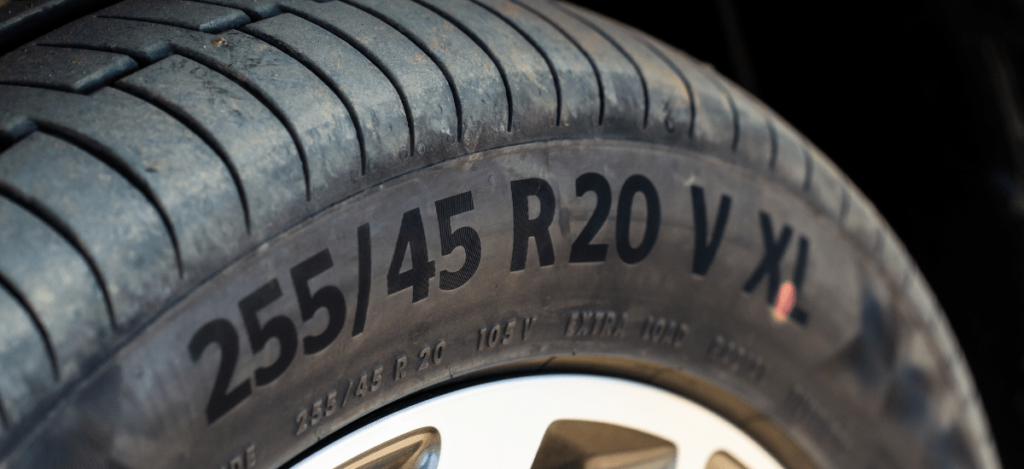
The diameter of a tire measures the length of the tire from top to bottom in inches. The typical tire diameters are 14, 15, 16, 17, 19, and 22 inches. This number is written on the tire for you to read. If your tire says P215/65R15, the diameter of the wheel is 15 inches.
The diameter matters more for the car’s performance than you think. The larger the tire, the more stable your car will be. This can allow your car to travel at faster speeds while increasing its braking power. However, bigger tires come with a trade-off. By increasing its size, the tires’ sidewalls are compromised, making them more susceptible to bumpier rides.
Tread Depth
The tread of a tire refers to the rubber on its circumference that makes contact with the road. The tread is the biggest difference between all-season and snow tires. Thicker treads with wide grooves can cut through snow, rain, and other challenging terrains with more ease. However, tires with thicker treads can lead to noisier and slower rides.
Rigidity
The rigidity of the tire comes from the rubber substance it is made of. Softer tires with lesser rigidity are great for grip and speed but they wear down at a faster rate. Harder tires have more rigidity and wear down more slowly, but they don’t have a good grip initially. This can reduce your car’s performance.
Width
The width of a tire measures from shoulder to shoulder and is in direct correlation with your car’s suspension. If you want wider tires, you need to upgrade your car’s suspension. Improving one without the other may lead to a lack of control over the steering wheel and be hazardous. If you want a better suspension, getting wider tires can get you better performance.
Choose the Best Tires at K Tire Pro, Duluth
Picking the right tires for your car can be a confusing process. However, knowing your options and how they relate to your car can save time and money. Our trained staff at K Tire Pro in Duluth, GA, can help you iron out all your concerns. We specialize in premium Korean tires, such as Kumho Tire, Hankook Tire, Nexen Tire, and more. Our tire deals are unbeatable, so you can trust us to offer the best value for your money!
Visit us at 3426 Buford Highway NE, in Duluth, GA, or call us at (678)-226-1630 for more details.
Related Posts
When to Replace Your Tires: 7 Warning Signs
Keeping your tires in top shape is crucial for the safety and performance of your vehicle. Tires are the only point of contact between your car and the road, which means they play a vital role in handling, braking, and…
What’s Included in a Tire Inspection and Why You Shouldn’t Skip It
Tires are one of the most overlooked yet most critical components of any vehicle. Whether you drive a gas-powered car, a hybrid, or an electric vehicle, your tires directly affect safety, handling, braking, and overall driving comfort. Despite their importance,…
The Step-by-Step of a Proper Tire & Wheel Alignment
When it comes to keeping your car safe and smooth on the road, tire and wheel alignment often doesn’t get as much attention as oil changes or brake checks. Yet, it plays a critical role in how your car drives,…
How to Know When Your Tires Need Repair or Replacement
Your tires are your car’s only connection to the road, which means they play a critical role in your safety, comfort, and fuel economy. Yet they’re also one of the most overlooked parts of vehicle maintenance. Many drivers don’t realize…
When to Replace Your Tires: A Complete Guide to Tire Replacement
When you think about vehicle safety and performance, tires might not immediately come to mind. Yet, your tires are the only contact between your car and the road, and maintaining them in excellent condition is essential. At K Tire Pro,…
EV Tire Service: How to Maintain Tires for Electric Vehicles
Electric vehicles (EVs) are changing the way we drive. They’re quiet, fast, and better for the environment. But did you know that the tires on EVs need special attention? If you drive an electric car—or plan to someday—it’s super important…
Tire Repair: How to Handle Minor Damage and Extend Tire Life
You're not alone if you’ve ever felt that dreaded thud under your car. Minor tire damage happens to the best of us, whether it’s a small nail puncture or a slow leak that sneaks up on you. The good news…
Tire Repair: How to Handle Minor Damage and Extend Tire Life
Your tires are the only part of your vehicle that comes into contact with the road. Hence, they are the most prone to wear and tear, often caused by minor damages that, if left unchecked, can lead to bigger problems. …
Signs It’s Time for a Tire Replacement: A Comprehensive Guide
How to Choose the Right Tires for Your Car Picking the right kind of tires for your car can go a long way. The right set of tires can do as much for your car's performance as improving your engine…