


7 Mistakes You’re Making with Electric Vehicle Tire Maintenance (and How to Fix Them)
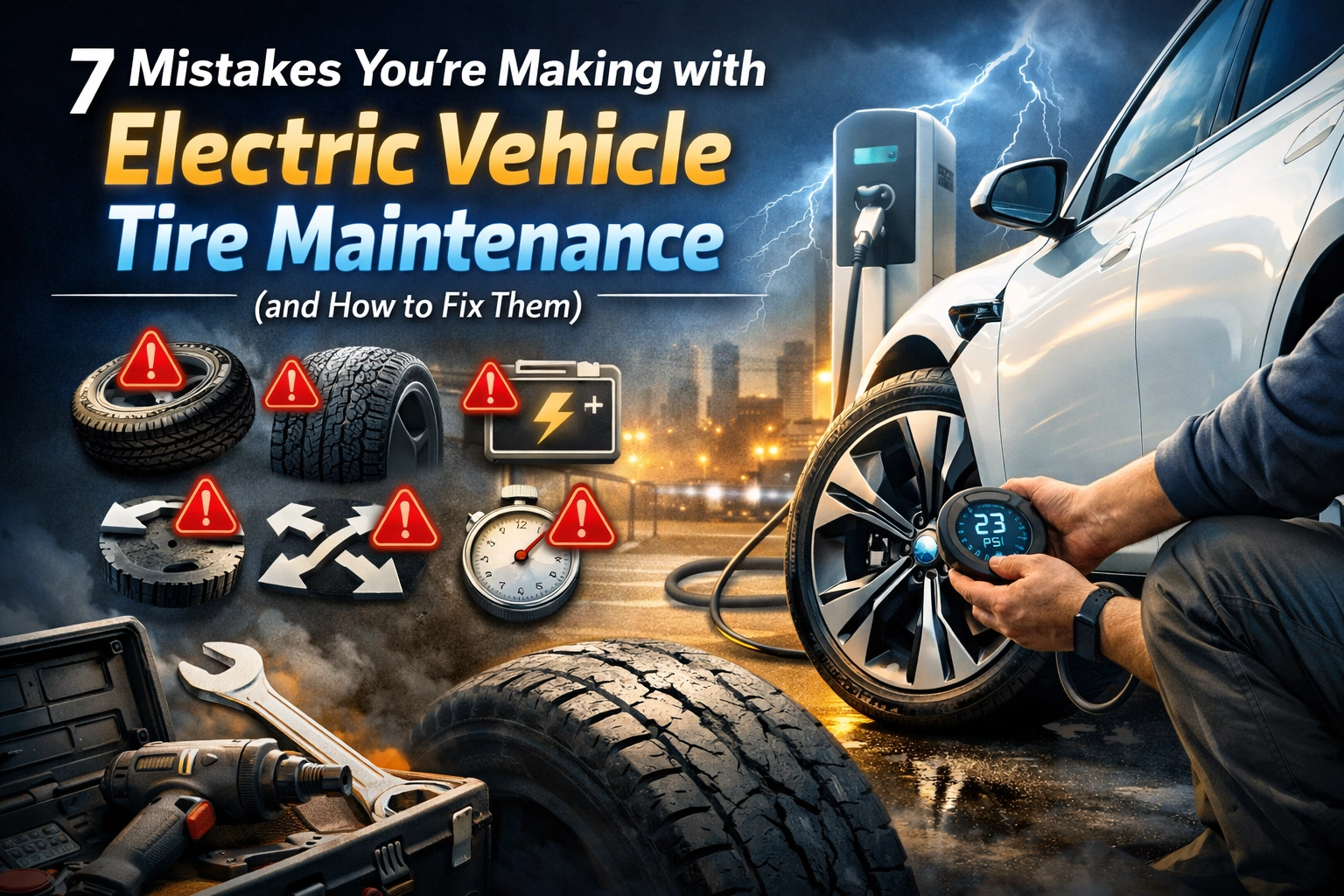
Think about the last time you hit the accelerator in your electric vehicle (EV). That silent, instant “zip” is one of the best parts of driving electric. But here is the reality check: while you’re enjoying that torque, your tires are bearing the brunt of a massive amount of physical stress. In fact, your tires are the only four points of contact between your heavy, high-tech machine and the pavement of Buford Highway.
When it comes to electric vehicle tire maintenance, the stakes are higher than they are for traditional gas cars. Because EVs don’t require oil changes, many owners forget that their tires need more attention, not less. At K Tire Pro in Duluth, we’ve seen a surge in EV owners coming in with prematurely worn treads simply because they were applying “gas car logic” to an electric platform.
If you want to protect your investment and keep your range high, you need to avoid these seven common mistakes.
1. Ignoring the Extra Weight of EVs
The biggest secret your EV is hiding is its weight. Thanks to the massive battery packs sitting in the chassis, an electric vehicle can weigh 20% to 30% more than a similarly sized internal combustion engine (ICE) vehicle. For example, a mid-sized electric SUV might weigh as much as a heavy-duty gas pickup truck.
This extra mass puts constant pressure on the tire sidewalls and increases the friction generated every time you turn or stop. If you treat your EV tires like they’re carrying a featherweight load, you’re going to see them wear down much faster than expected.
The Fix: Always be mindful of your load. Check your vehicle’s door placard for the Gross Vehicle Weight Rating (GVWR) and ensure you aren’t overloading the car with extra cargo on top of the already heavy battery. More importantly, realize that your tires are working overtime every single mile you drive.

2. Using Standard Tires Instead of EV-Specific Ones
When it’s time for a replacement, it’s tempting to grab the cheapest set of tires that fit the rim. However, choosing the right tires for your car is even more critical for EVs.
Standard tires aren’t built for the “instant torque” that electric motors provide. When you step on the pedal, an EV delivers 100% of its power immediately. Standard rubber can’t always handle that “bite,” leading to micro-slippage that shreds the tread. Furthermore, EVs are nearly silent, meaning you’ll hear every bit of road noise if you don’t use tires with specialized foam liners or “Low Rolling Resistance” (LRR) compounds.
The Fix: Invest in EV-specific tires. Brands like Kumho offer specialized options that balance durability with the quiet ride you expect. You can learn more about why tire brands matter here. These tires are reinforced to handle the weight and designed to maximize your battery range.
3. Neglecting Alignment (The Silent Efficiency Killer)
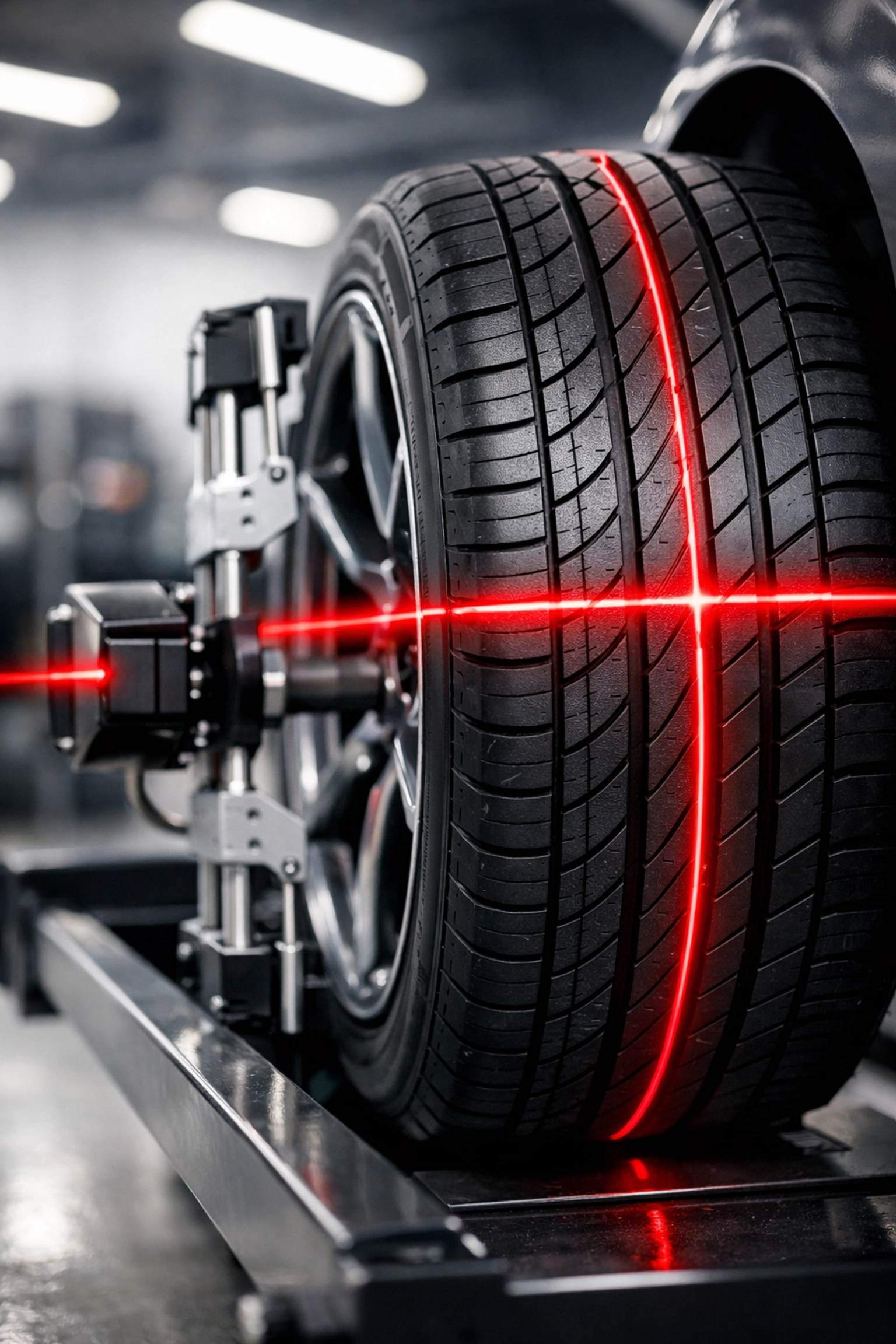
Because EVs are so heavy, a single run-in with a Duluth pothole can knock your wheels out of alignment much easier than it would on a lighter car. If your alignment is off even by a fraction of a degree, your EV has to work harder to overcome the “drag” of the misaligned tire. This doesn’t just eat your tires; it eats your battery range.
Think of it like trying to push a shopping cart with one wonky wheel: it takes way more effort to keep it going straight. In an EV, that extra effort translates directly to fewer miles per charge.
The Fix: Get your alignment checked at least once a year, or immediately if you notice the car pulling to one side. At K Tire Pro, we use state-of-the-art alignment equipment specifically calibrated for the unique suspension geometries of modern electric vehicles. Understanding the step-by-step of a proper alignment can help you see why this professional service is so vital.
4. Running with Incorrect Tire Pressure
In a gas car, low tire pressure just means worse gas mileage. In an EV, it can be the difference between making it to the next charging station and being stranded. Low pressure increases the tire’s “footprint” on the road, which creates more rolling resistance.
Temperature swings in Georgia can also cause your PSI to fluctuate wildly. For every 10-degree drop in temperature, you can lose about 1 PSI. For an EV, being down 5 PSI across all four tires can significantly degrade your efficiency.
The Fix: Check your tire pressure monthly with a high-quality gauge. Don’t just wait for the dashboard light to come on: by the time the TPMS (Tire Pressure Monitoring System) alerts you, you’ve likely already lost efficiency and increased tread wear. Aim for the exact PSI listed on your driver-side door jamb.
5. Skipping Regular Rotations
On a traditional front-wheel-drive gas car, the front tires do almost all the work. In many EVs, especially dual-motor all-wheel-drive versions, the weight distribution and power delivery are different, but the tires still wear at different rates based on how you drive.
Skipping rotations is one of the fastest ways to void a tire warranty and end up needing a full set of four tires prematurely. Because of the weight and torque we mentioned earlier, EV tires can wear out up to 20% faster than ICE tires if they aren’t moved around the vehicle regularly.
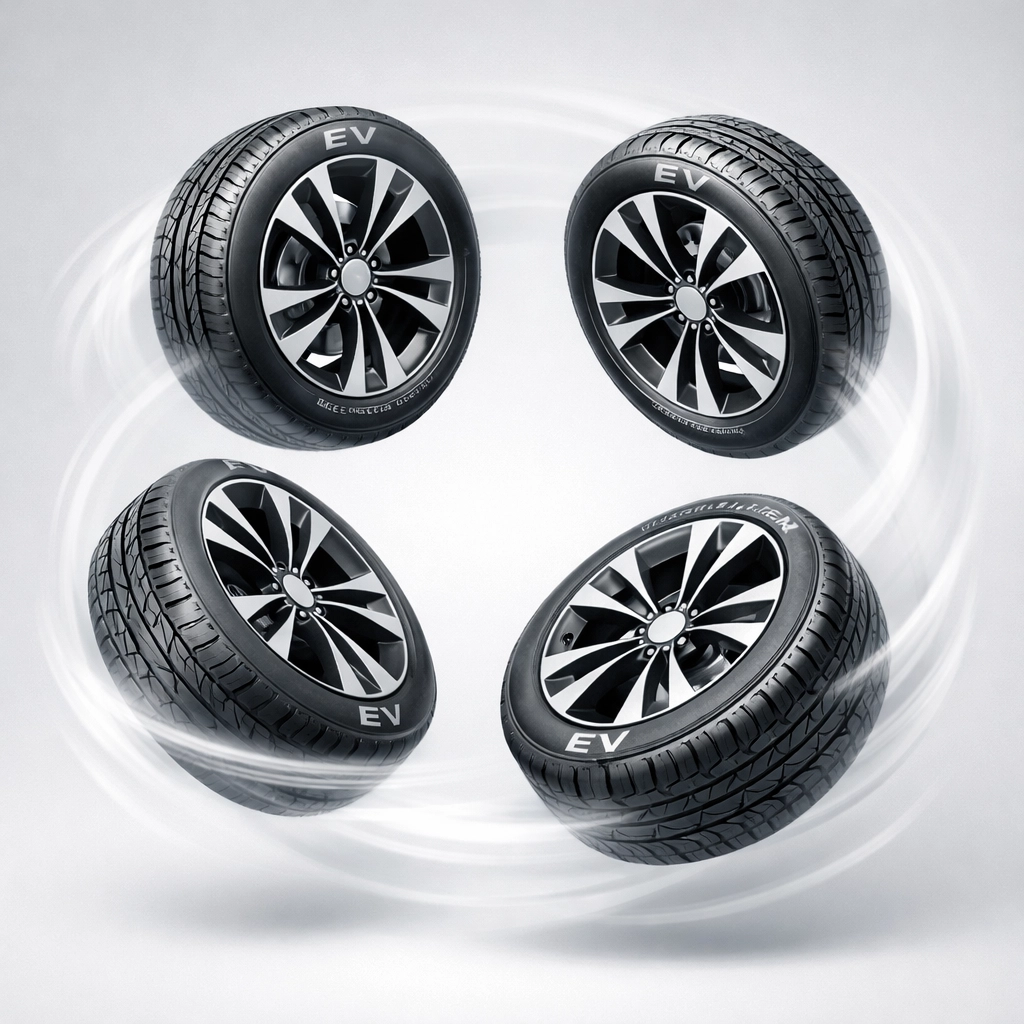
The Fix: We recommend a tire rotation every 5,000 to 7,500 miles. It’s a quick service that ensures the “workload” is shared equally among all four tires. If you’re unsure if you’re due, check out our complete guide to tire replacement and maintenance.
6. Overlooking Tread Wear Patterns
Your tires are trying to talk to you; you just need to know how to listen. Because EV owners don’t visit shops for oil changes every few months, they often miss the early warning signs of mechanical issues that show up as “cupping” or “feathering” on the tire tread.
- Wear on both edges: Usually means under-inflation.
- Wear in the center: Usually means over-inflation.
- Wear on just one side: This is a classic sign of an alignment issue.
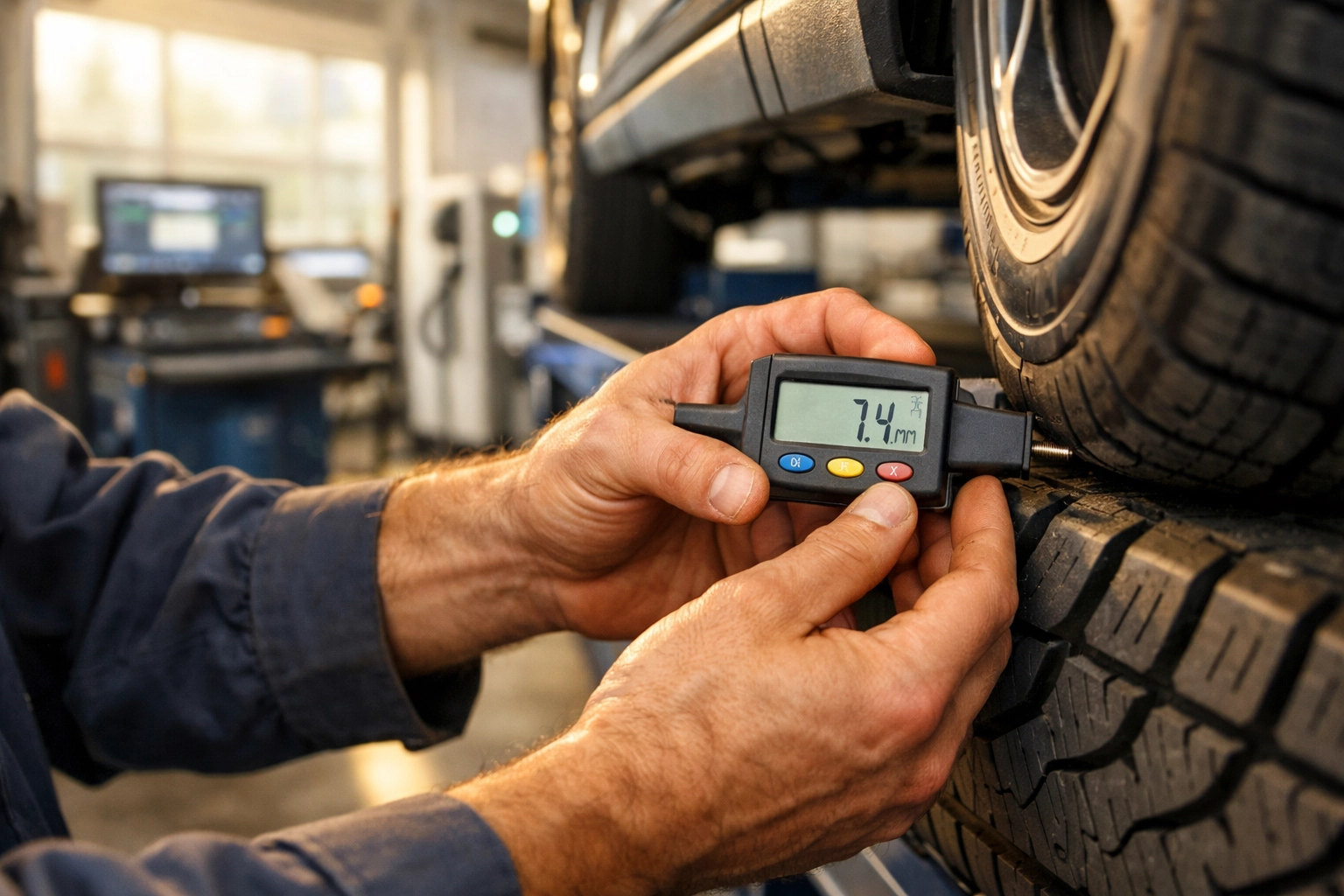
The Fix: Perform a “Penny Test” at home once a month. Insert a penny into the tread with Lincoln’s head upside down. If you can see the top of his head, your tread is too thin (less than 2/32”). Also, run your hand over the tread: if it feels rough in one direction but smooth in the other, your alignment is likely off. If you find damage, you’ll need to decide on tire repair vs. replacement.
7. Waiting Too Long for Professional Inspections
Modern EVs are “set it and forget it” machines in many ways, but the chassis and tires still live in the real world of heat, rain, and road debris. Many owners wait until they hear a noise or feel a vibration to visit a shop. By that point, the damage is often done, and a simple repair has turned into an expensive replacement.
Preventative care is always cheaper than reactive repair. A professional eye can spot a tiny nail in the tread or a bulging sidewall that you might miss while rushing through your GA commute.
The Fix: Schedule a professional EV tire service in Duluth at K Tire Pro. Our specialized EV technicians understand the nuances of lifting an electric vehicle safely (you have to be careful not to damage the battery tray!) and can perform a comprehensive check. Here is exactly what’s included in a professional tire inspection.
Why Choose K Tire Pro for Your EV?
Maintaining an electric vehicle requires a different set of skills and tools than a traditional car. At K Tire Pro, located right on Buford Highway in Duluth, we’ve invested in the technology and training necessary to handle the most popular EV models on the road today.
Whether you need a quick rotation, a precision alignment, or advice on the best tires to boost your range, our friendly team is here to help. Don’t let a simple maintenance mistake shorten the life of your tires or your battery.
Ready for a check-up?
Stop by and see us or contact us today to schedule your next service. Let’s keep your EV running smoothly, safely, and efficiently for miles to come!