
Brake Service in the EV Age: Why Regenerative Braking Changes Your Maintenance Schedule
Your brakes are the last line of defense between a routine drive and a serious collision. That safety role does not change just because your vehicle is electric.
Regenerative braking can make an EV feel almost effortless to drive around Duluth. Lift off the accelerator, and the vehicle begins slowing while sending some energy back to the battery. Because the electric motor handles much of the everyday deceleration, traditional brake pads may last far longer than they do on a gas-powered vehicle.
But “less wear” does not mean “no maintenance.”
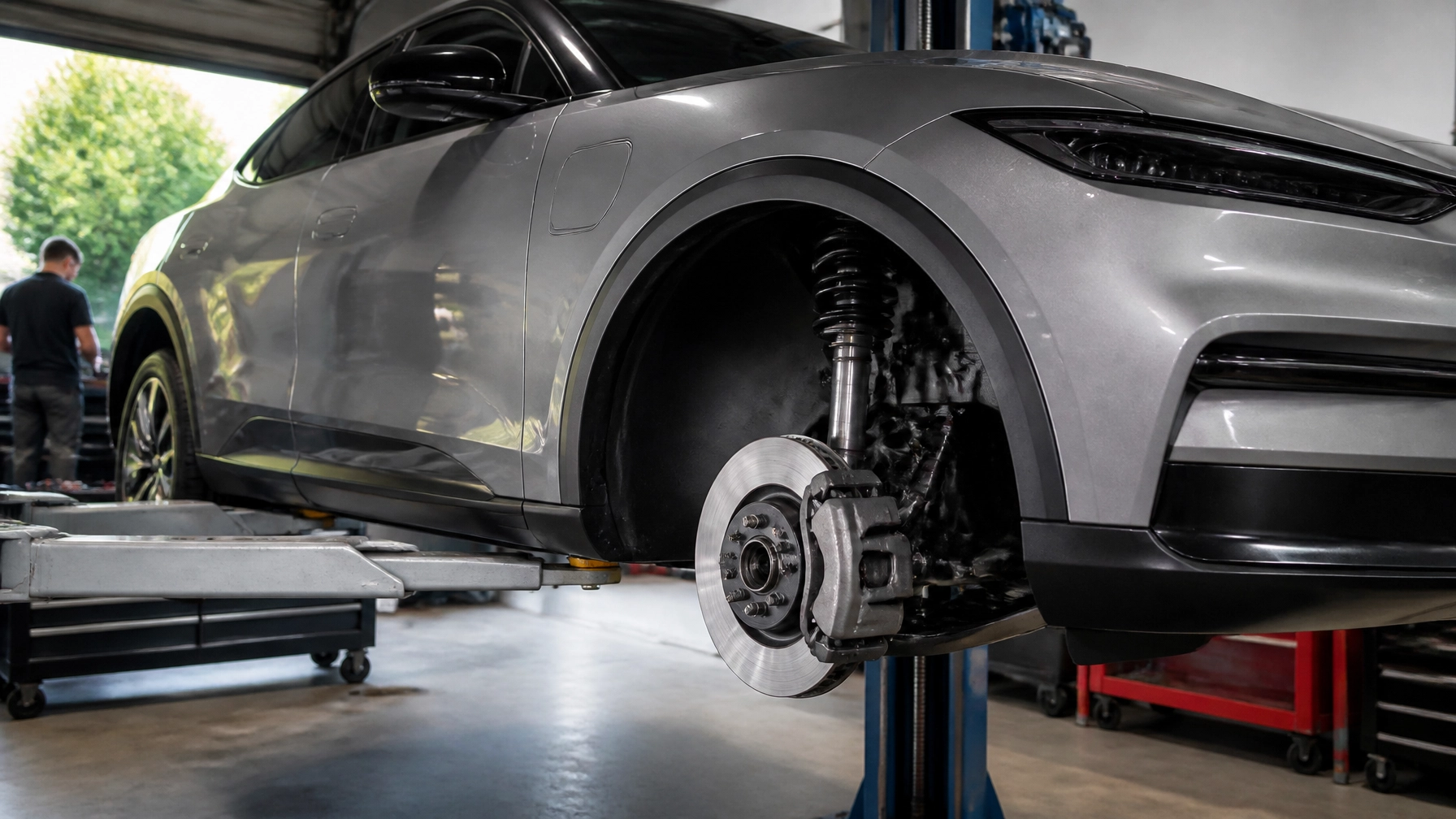
In fact, regenerative braking changes what technicians need to watch. Pads may not wear quickly, but rotors can develop surface rust, calipers can stick, and brake fluid can absorb moisture over time. With late-summer heat, humidity, and frequent rain in Georgia, those less-visible concerns deserve attention.
How regenerative braking changes your EV’s brake system
In a conventional vehicle, pressing the brake pedal usually sends hydraulic pressure to the calipers. The brake pads clamp against the rotors, creating friction that turns the vehicle’s motion into heat.
An EV can use a second method: regenerative braking.
The electric motor helps slow the vehicle
During regenerative braking, the drive motor works in reverse. Instead of using electrical energy to turn the wheels, it uses the vehicle’s motion to create electricity and return some energy to the battery.
Think of it like using a bicycle’s resistance system while riding downhill. The resistance slows you, while the recovered energy is put to useful work.
This reduces how often the friction brakes are used during ordinary stops. According to the U.S. Department of Energy’s Alternative Fuels Data Center, regenerative braking significantly reduces brake wear on electric vehicles and hybrids.
The result can be excellent long-term savings. You may go much longer between brake pad replacements, and the brake system may produce less dust during normal driving.
Friction brakes still handle important situations
Regenerative braking is not the only braking system in your EV. Traditional pads, rotors, calipers, brake lines, and fluid remain essential.
Friction brakes may be needed when:
- You make a sudden emergency stop.
- The battery is fully charged and cannot accept much additional energy.
- The vehicle is traveling at very low speed.
- The road is wet or traction conditions require more controlled braking.
- The vehicle’s computer determines that mechanical braking is necessary.
That means the friction brake system must be ready even if it is used less often. A fire extinguisher is valuable precisely because you hope you will not need it every day. Your mechanical brakes work in much the same way.
Why EV brake pads can last longer but still need inspections
Reduced pad wear is one of the biggest benefits of regenerative braking. However, many EV owners make the mistake of assuming that long pad life eliminates the need for regular brake checks.
It does not.
Brake rotors can develop rust and pitting
Rotors need regular contact with the pads to maintain a clean, even friction surface. When an EV relies heavily on regeneration, the pads may barely touch the rotors during many trips.
That can allow a thin layer of surface corrosion to form, especially after rain or when the vehicle sits overnight. A small amount of surface rust may disappear during normal friction braking. More serious corrosion can create pitting, roughness, vibration, or uneven braking.
A rotor that looks acceptable through the wheel spokes may still need a closer inspection. During brake service in Duluth, GA, a technician can evaluate the rotor’s condition, thickness, surface, and relation to the pad.
Calipers and slide pins can become less active
Brake calipers must move correctly so the pads apply and release evenly. Slide pins, hardware, and seals are all part of that process.
When friction braking happens less frequently, caliper components may receive less movement. Over time, dirt, moisture, or dried lubricant can contribute to restricted movement. A sticking caliper may keep a pad lightly touching the rotor, causing heat, uneven wear, noise, or reduced efficiency.
This is why an EV brake inspection should look beyond pad thickness. A technician should also assess whether the caliper is moving freely and whether the hardware is in good condition.
Brake fluid still absorbs moisture in an EV
Electric vehicles may not need engine oil changes, but they still use hydraulic brake fluid. That fluid transfers pressure from the brake pedal to the calipers.
Brake fluid is hygroscopic, meaning it naturally absorbs moisture from the surrounding environment. Over time, moisture can reduce the fluid’s boiling resistance and contribute to corrosion inside hydraulic components.
Why low brake heat matters
In a conventional vehicle, frequent braking creates heat. That heat does not remove all moisture from brake fluid, but an EV’s friction brakes may operate less often and at lower temperatures.
That makes time more important than mileage for brake fluid maintenance. An EV that travels only a few thousand miles each year may still need a fluid inspection or replacement based on the manufacturer’s schedule.
Some manufacturer guidance recommends replacing brake fluid around every two to three years, while other schedules call for testing it first. Your owner’s manual should be the final authority.
Do not judge brake fluid by appearance alone. Fluid can look reasonably clean and still contain excess moisture. A proper test can provide more useful information.
Why late summer in Georgia is a good time for brake service
Late summer is a practical maintenance window for EV owners in Duluth and nearby communities.
Georgia’s warm, humid conditions and regular rain can leave moisture on exposed brake components. Stop-and-go driving around Gwinnett County also creates ideal conditions for heavy use of regenerative braking and minimal use of the friction brakes.
That combination can hide developing problems:
- The brake pads may still have plenty of material.
- The rotors may begin to corrode from limited friction contact.
- Caliper hardware may become stiff.
- Brake fluid may continue absorbing moisture.
- A problem may not become obvious until stronger braking is required.
Scheduling an inspection before fall travel or a busy school-year commute is a simple way to reduce risk. It may also prevent a small corrosion or hardware issue from becoming a larger repair later.
A practical EV brake maintenance schedule
Every vehicle is different, so use the maintenance intervals in your owner’s manual as the starting point. A practical baseline for many EV owners includes the following.
Check the brakes at least once a year
An annual inspection can include:
- Brake pad thickness and evenness.
- Rotor surface condition and thickness.
- Caliper movement and slide-pin condition.
- Brake hoses and visible lines.
- Signs of overheating, leaks, or uneven wear.
- Brake warning lights or stored vehicle alerts.
It is convenient to combine this inspection with tire rotation, mounting, balancing, or alignment service. A trusted tire shop in Duluth, GA already has a reason to inspect the wheels and may be able to identify brake concerns while the vehicle is being serviced.
Test or replace brake fluid on schedule
Ask whether your brake fluid should be tested or replaced based on age and the manufacturer’s recommendation. Do not wait for a soft pedal before taking action. A soft or sinking pedal can indicate a serious hydraulic problem and should be addressed promptly.
Use the friction brakes safely and occasionally
Some EV manufacturers recommend periodically using the friction brakes to help keep the rotors clean and the braking hardware active.
Only do this where it is legal and safe, with good visibility and plenty of following distance. A few controlled, firm stops from a moderate speed may help exercise the mechanical brakes. Do not deliberately make hard stops if the vehicle has a warning light, grinding noise, pulling, vibration, or a soft pedal. Those symptoms require an inspection instead.
Simple brake checks you can do at home
You do not need specialized equipment to notice early warning signs.
Listen during the first stops after rain
A brief light scraping sound after the vehicle has been parked in wet conditions may be surface rust clearing from the rotors. Persistent grinding, squealing, or scraping is different. If the sound continues after several normal stops, schedule service.
Pay attention to pedal feel
With the vehicle safely parked, press the brake pedal. It should feel firm and consistent. A pedal that feels spongy, sinks gradually, or requires more travel than usual should not be ignored.
Never crawl under the vehicle or touch brake components while they are hot. If you see fluid near a wheel or notice a brake warning message, arrange professional service.
Watch for pulling or vibration
If the vehicle pulls to one side while braking, a caliper, pad, rotor, tire, or alignment issue may be involved. A pulsing pedal or steering wheel vibration can point to rotor thickness variation or another braking concern.
Because tires and brakes work together, EV drivers may benefit from combining EV tire service in Duluth with a brake inspection. Correct tire pressure, balanced wheels, and accurate alignment also support predictable stopping and handling.
Why EV experience matters during brake service
An EV’s quiet operation can make unusual sounds easier to notice, but the vehicle’s braking behavior is also different. Regeneration, friction braking, battery state, and electronic controls all influence how the vehicle slows.
At K Tire Pro, our EV-trained technicians understand how regenerative braking affects brake wear. We provide brake services for electric vehicles as well as all makes and models, with attention to the pads, rotors, calipers, and fluid: not just the component that appears most worn.
That same EV focus extends to tire care. Electric vehicles are heavier and deliver instant torque, so proper tire selection, balancing, and alignment matter for safety, range, and long-term operating costs.
Keep your EV ready to stop
Regenerative braking is a major advantage. It can reduce pad wear, lower maintenance costs, and help recover energy that would otherwise become heat. But it does not replace the mechanical brake system.
For drivers in Duluth, the smartest approach is simple: inspect the brakes regularly, maintain brake fluid on time, watch for corrosion and sticking calipers, and respond quickly to changes in pedal feel or braking behavior.
If you need brake repair in Duluth, GA, or want to combine brake care with EV tire service, visit K Tire Pro on Buford Highway. Our team can help you keep your EV: or any make and model: safe, reliable, and ready for the road. Request an appointment or call 678-226-1630.
Related Posts
Winter Tires in Georgia: Do You Actually Need Them?
Your tires are the only parts of your vehicle touching the road. That makes their cold-weather grip a safety issue, not just a question of ride comfort. So, do drivers in Duluth, Georgia, need winter tires? For most people, the…


Beyond the Tread: Wheel Balancing for a Smooth Duluth Commute
When you glide down Buford Highway on your morning drive, your car's tires are the only physical contact points keeping you securely connected to the pavement. Think of your tires and wheels like the spinning blades of a high-speed ceiling…

EV Tire Secrets Revealed: The “Hidden” Wear Pattern Killing Your Tread This Duluth Summer
When you're cruising down Buford Highway in a quiet, high-torque electric vehicle, the last thing you’re thinking about is the invisible war happening under your wheel wells. You’ve made the switch to electric for the efficiency, the speed, and the…

Preparing Your EV for Georgia’s Humidity: Essential Tire and Filter Tips
If you have lived in Georgia for more than a single summer, you know exactly what we mean when we say the air gets "thick." That heavy, humid blanket doesn't just make your morning walk feel like a swim; it…

Are You Making These Common Tire Balancing Mistakes with Your EV?
When you’re driving an electric vehicle (EV), the experience is all about that smooth, silent glide. Whether you’re cruising down Buford Highway or navigating the morning rush in Duluth, your EV is designed to be whisper-quiet. But that silence is…

7 Mistakes You’re Making With Your EV Tires (And How to Save Your Tread)
Think about the last time you stepped into your electric vehicle. You probably marveled at the silent cabin, the instant "oomph" when you hit the pedal, and the fact that you’re done with gas stations forever. But here is a…