

Winter Tires in Georgia: Do You Actually Need Them?
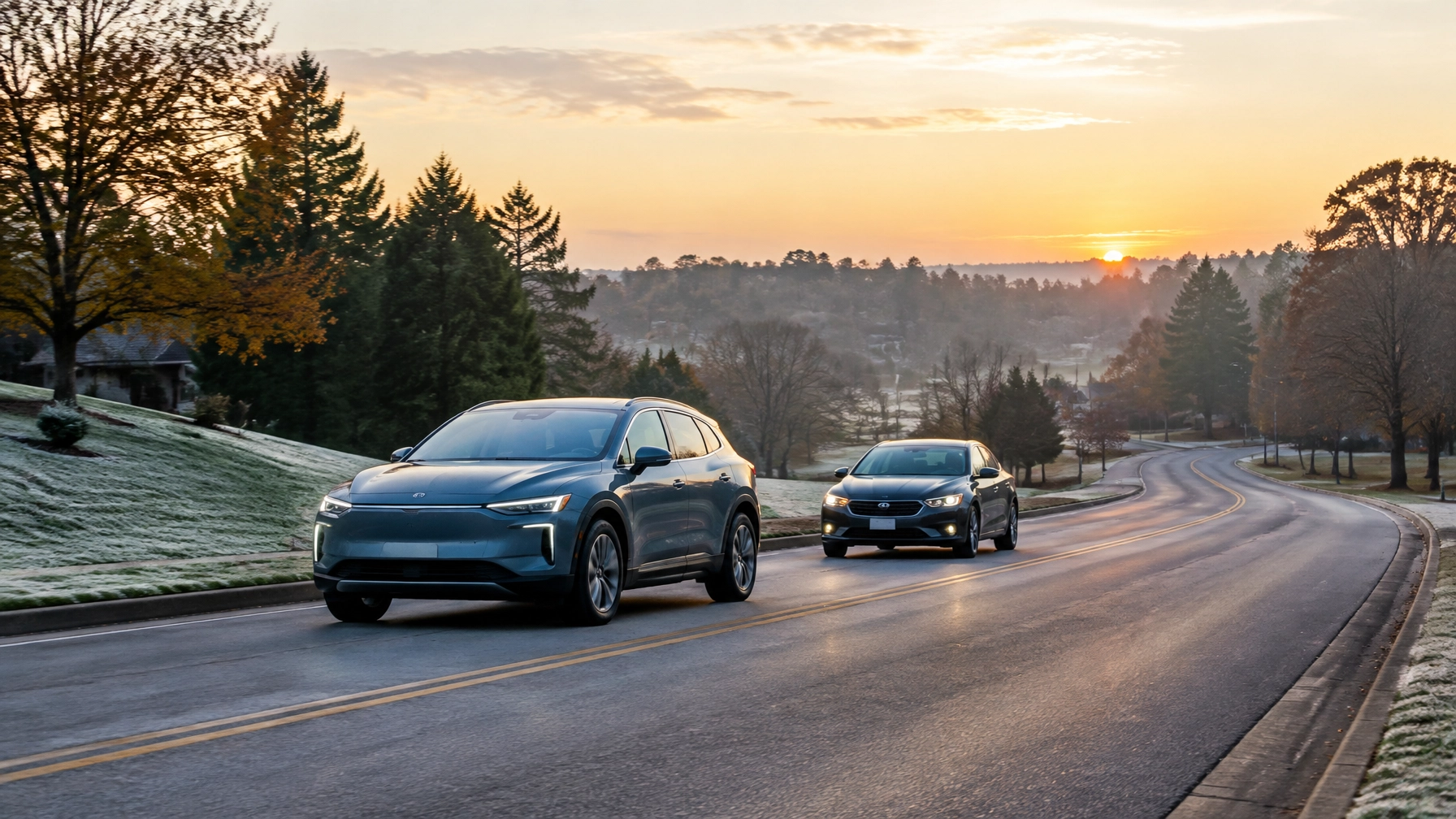
Your tires are the only parts of your vehicle touching the road. That makes their cold-weather grip a safety issue, not just a question of ride comfort.
So, do drivers in Duluth, Georgia, need winter tires?
For most people, the honest answer is no, not a dedicated set of winter tires. Duluth and metro Atlanta typically do not experience the long, deeply frozen winters or frequent heavy snow that make winter tires essential in places farther north. However, that does not mean cold weather has no effect on your tires.
Cold mornings can lower tire pressure. Rubber compounds can become less flexible. A tire with worn tread, poor alignment, or an imbalance may have less traction when roads are wet, frosty, or untreated.
For most Duluth drivers, a well-maintained set of quality all-season or all-weather tires is the smarter choice. Dedicated winter tires make sense for a smaller group of drivers with specific travel habits.
What Cold Weather Does to Your Tires
Georgia winters may be mild, but temperature swings can still affect tire performance.
Cold air lowers tire pressure
As the temperature drops, the air inside your tires contracts. A common rule of thumb is a pressure change of roughly 1 psi for every 10°F temperature change.
For example, if your tires were checked during a warm afternoon and the temperature drops significantly overnight, they may be several psi below the vehicle manufacturer’s recommended pressure by morning.
That matters because underinflated tires can:
- Reduce steering response and wet-road grip
- Increase rolling resistance and energy use
- Create extra heat inside the tire
- Cause faster shoulder wear
- Increase the risk of tire damage on potholes
Your tire pressure monitoring system may not warn you about a small pressure loss. Many systems activate only after pressure falls considerably below the recommended level.
The safest approach is to check your tires at least monthly and after major temperature swings.
Rubber becomes less flexible
Tires rely on their rubber compound to conform to the texture of the pavement. Think of the tread like a flexible shoe sole. A flexible sole can grip the ground; a stiff one has less ability to follow small changes in the surface.
As temperatures approach freezing, conventional all-season rubber may become less flexible. This can reduce traction during cold rain, frost, slush, or light snow, even when the road does not look especially dangerous.
Dedicated winter tires use compounds and tread designs engineered to remain more pliable in colder conditions. That advantage is significant in consistently cold climates. In Duluth, however, the benefit may not justify the expense and inconvenience of a second tire set for every driver.
Winter Tires vs. All-Season and All-Weather Tires
The right choice depends less on where you live and more on where and when you drive.
Traditional all-season tires
Quality all-season tires are designed to handle a broad range of conditions, including dry pavement, rain, warm temperatures, and occasional light winter weather.
They are usually a good fit for drivers who:
- Stay mostly around Duluth and do not regularly travel far from home.
- Rarely drive during snow or ice events
- Use treated and maintained roads
- Want one tire set for year-round driving
All-season tires are not the same as winter tires. They can lose cold-weather flexibility and are not designed for repeated travel on packed snow or ice.
All-weather tires
All-weather tires are a useful middle ground. They are designed for year-round use but generally offer stronger cold-weather and light-snow performance than conventional all-season tires.
Many all-weather tires carry the 3-Peak Mountain Snowflake symbol, also called the Severe Service emblem. This indicates that the tire has passed a standardized snow-traction test.
For a Duluth driver who wants one tire set but occasionally faces winter weather, an all-weather tire may provide a practical extra margin. It can be especially useful if your commute includes hilly roads, shaded pavement, or areas that are slower to receive treatment after a storm.
When comparing options, K Tire Pro can help drivers in Duluth review premium Korean tire brands such as Kumho, Hankook, and Nexen for suitable all-season or all-weather applications. The correct tire still depends on your vehicle, driving pattern, load requirements, and the available sizes.
Dedicated winter tires
Winter tires provide the most specialized cold-weather traction. Their softer compounds and additional tread features are designed for snow, ice, and consistently low temperatures.
They may be worth considering if you:
- Frequently travel into the North Georgia mountains during winter
- Drive early in the morning on untreated or shaded roads
- Must travel during or shortly after snow and ice events
- Regularly encounter steep mountain grades and winding roads
- Prefer the greatest available cold-weather traction over convenience
If you choose winter tires, install a complete set of four. Mixing winter tires with other tire types can create unpredictable handling, especially during braking or cornering.
Winter tires also should not be left on through Georgia’s warmer months. Their softer rubber can wear faster on warm, dry pavement and may feel less precise in higher temperatures.
The Smarter Choice for Most Duluth Drivers
For most people, the best winter preparation is not buying a dedicated winter set. It is making sure the tires already on the vehicle are healthy and correctly maintained.
Before temperatures settle into the colder part of the year, check:
Tread depth and visible damage
Look for uneven wear, cracks, bulges, cuts, or objects embedded in the tread or sidewall.
You can perform a quick tread check at home with a penny:
- Insert a penny into a major tread groove with Lincoln’s head facing down.
- Check several locations across each tire.
- If you can see the top of Lincoln’s head consistently, the tread is getting low and should be professionally evaluated.
The penny test is only a screening tool. It cannot identify internal damage, aging rubber, or an unsafe repair.
Cold tire pressure
Find the Tire and Loading Information label on the driver-side door jamb. It lists the correct cold inflation pressure for your vehicle. Use that number, not the maximum pressure printed on the tire sidewall.
For the most accurate reading:
- Check tires before driving or after the vehicle has been parked for several hours.
- Check all four tires, plus the spare if your vehicle has one.
- Add air until each tire reaches the placard recommendation.
- Recheck after major temperature changes.
For more detailed federal guidance, NHTSA explains how to check and maintain tire pressure.
Alignment and balance
Cold weather cannot cause a bad alignment, but it can make an existing problem more noticeable. If your vehicle pulls to one side, the steering wheel is off-center, or the tread is wearing faster on one edge, schedule a wheel alignment in Duluth, GA.
A tire or wheel imbalance may show up as vibration through the steering wheel or seat, especially at highway speeds. Correct tire balancing in Duluth, GA helps the tire rotate smoothly and can reduce irregular wear.
An alignment and balance check before the season changes can help you avoid wasting money on premature tire replacement.
Why Cold-Weather Grip Matters Even More for EV Owners
Electric vehicles deserve extra attention during cold weather.
EVs are often heavier than comparable gas-powered vehicles because of their battery packs. They also deliver strong, immediate torque. That instant power is part of what makes an EV enjoyable to drive, but it can also expose weak tread, low pressure, or poor road grip more quickly.
Cold-weather traction loss may be noticeable when:
- Accelerating from a stop
- Climbing a wet or frosty hill
- Braking on a cold surface
- Turning onto a highway
- Driving over uneven pavement
This does not mean every EV needs winter tires in Georgia. It means EV owners should be especially careful about tire condition and pressure. A professional EV tire service in Duluth can help confirm that the tire’s load rating, size, tread condition, and pressure are appropriate for the vehicle.
If you notice a pressure warning, vibration, or a slow leak, do not wait for a complete flat. A prompt tire repair in Duluth, GA may prevent additional damage and keep a small issue from becoming a roadside emergency.

A Practical Winter Checklist for Duluth Drivers
Before the first genuinely cold stretch, take a few minutes to:
- Check cold tire pressure using the door-jamb placard.
- Inspect tread depth, sidewalls, and valve stems.
- Look for uneven wear or objects in the tread.
- Confirm that your TPMS warning light is not illuminated.
- Schedule an alignment if the vehicle pulls or the steering wheel is off-center.
- Schedule balancing if you feel speed-related vibration.
- Consider all-weather tires if you regularly drive in occasional snow or on untreated roads.
- Consider dedicated winter tires if you frequently travel into the mountains during winter weather.
The Bottom Line
Most drivers in Duluth do not need dedicated winter tires. A quality all-season tire, or a 3-Peak Mountain Snowflake-rated all-weather tire for added winter capability, will usually be the better year-round solution.
Dedicated winter tires make sense when your routine includes frequent North Georgia mountain trips, early-morning travel on untreated roads, or driving during snow and ice events. Whatever tire type you choose, correct pressure, healthy tread, proper alignment, and accurate balancing are what help keep your vehicle connected to the road.
If you are unsure which option fits your vehicle or driving habits, visit K Tire Pro for a tire inspection, pressure check, alignment, balancing service, or tire recommendation in Duluth. We can help you prepare for the season without paying for more tire than Georgia driving actually requires.
Related Posts
Brake Service in the EV Age: Why Regenerative Braking Changes Your Maintenance Schedule
Your brakes are the last line of defense between a routine drive and a serious collision. That safety role does not change just because your vehicle is electric. Regenerative braking can make an EV feel almost effortless to drive around…


Beyond the Tread: Wheel Balancing for a Smooth Duluth Commute
When you glide down Buford Highway on your morning drive, your car's tires are the only physical contact points keeping you securely connected to the pavement. Think of your tires and wheels like the spinning blades of a high-speed ceiling…

EV Tire Secrets Revealed: The “Hidden” Wear Pattern Killing Your Tread This Duluth Summer
When you're cruising down Buford Highway in a quiet, high-torque electric vehicle, the last thing you’re thinking about is the invisible war happening under your wheel wells. You’ve made the switch to electric for the efficiency, the speed, and the…

Preparing Your EV for Georgia’s Humidity: Essential Tire and Filter Tips
If you have lived in Georgia for more than a single summer, you know exactly what we mean when we say the air gets "thick." That heavy, humid blanket doesn't just make your morning walk feel like a swim; it…

Are You Making These Common Tire Balancing Mistakes with Your EV?
When you’re driving an electric vehicle (EV), the experience is all about that smooth, silent glide. Whether you’re cruising down Buford Highway or navigating the morning rush in Duluth, your EV is designed to be whisper-quiet. But that silence is…

7 Mistakes You’re Making With Your EV Tires (And How to Save Your Tread)
Think about the last time you stepped into your electric vehicle. You probably marveled at the silent cabin, the instant "oomph" when you hit the pedal, and the fact that you’re done with gas stations forever. But here is a…